









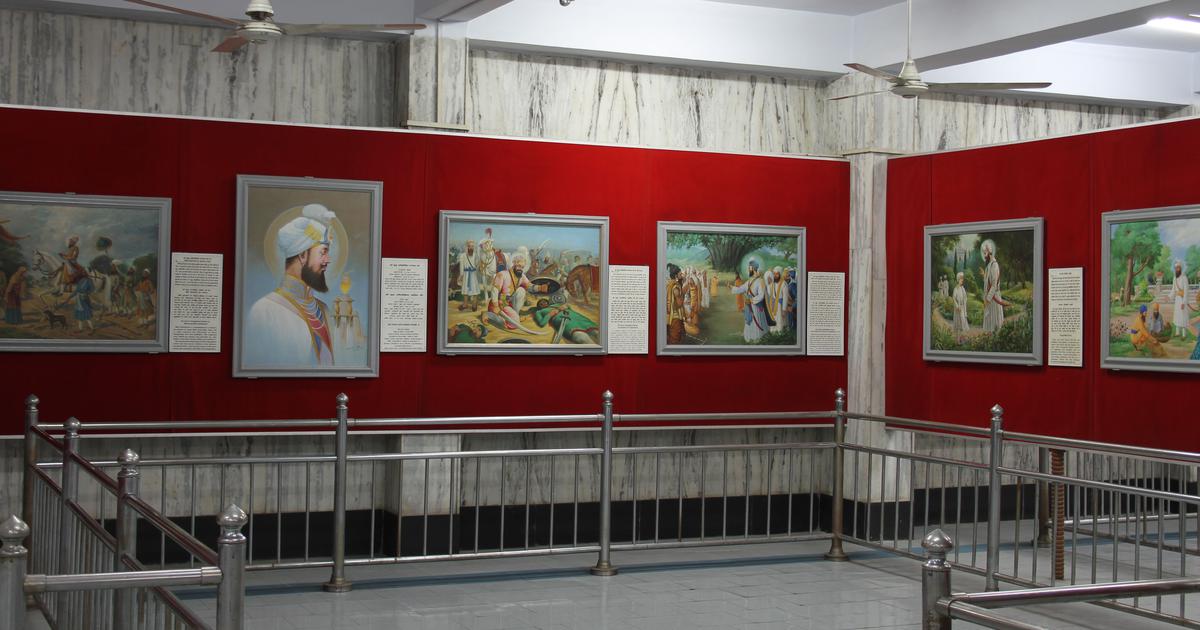
Bhai Mati Das Museum has a large collection of paintings on display and a majority of these were not prepared for the purpose of exhibition in a museum. They were made over a period of three decades, from the 1970s to the early 2000s, by the Punjab and Sind Bank (PSB) for publication in their annual calendars. These canvases, which lay in the bank’s collection for several years, were subsequently donated to the Delhi Sikh Gurdwara Management Committee for display in the Bhai Mati Das Museum at Chandni Chowk (Delhi). Why does a prominent public sector bank commission calendars on Sikh history? How were these paintings made and who made them? What is the relationship between the bank, the museum and Sikh heritage?
The PSB was founded in the year 1908, during the rise of the Singh Sabha movement, by three prominent Sikhs: Bhai Vir Singh, Sardar Trilochan Singh and Sardar Sunder Singh Majithia. It was nationalised in the year 1980 and continues to operate today.
The first PSB calendar on Sikh history was published in 1974 and featured six paintings of important figures in Sikh history – Bhai Vir Singh, Bhai Nand Lal Goya, Bhai Gurdas, Sufi saint Mian Mir, Baba Buddha and Bhai Kanhaiya. This was the beginning of a project on the promotion of Sikh heritage, which continued for at least three decades. Each year, the bank chose a theme from Sikh history for its annual calendar, commissioned artists to paint those themes, and published and circulated the calendars. The artists commissioned by the PSB include Kirpal Singh, Devender Singh, Bodhraj, Mehar Singh, Amolak Singh and Rahi Mohinder Singh. The PSB’s illustrated calendars featured themes drawn from Sikh history, principles of Sikhism and the teachings of the Sikh Gurus. The first calendar featured important figures of the Sikh tradition. Other themes that appeared in the calendars include women in Sikh history (in 1975), the singers (kirtaniyas) associated with the Gurus (1976), Guru Nanak’s Barah Mah in 1978 and the 2003 calendar based on a verse of Bhai Gurdas: Jithey Baba pair dharay puja aasan thaapan soa (Wherever the Guru set his foot, that place became sanctified).
Each calendar contained an introductory message from the head of the bank, explaining the choice of theme, its significance in Sikh history and its relevance in today’s world – a feature that continues even now. The history paintings in the calendar illustrated the chosen theme, appearing with a title and explanation in English and Punjabi and sometimes Hindi. Together, the paintings and the descriptions in the calendar are like a storybook. The stories emphasise the values of Sikhism and the uniqueness of Sikh history and are meant to be a source of inspiration for the younger generations to emulate.
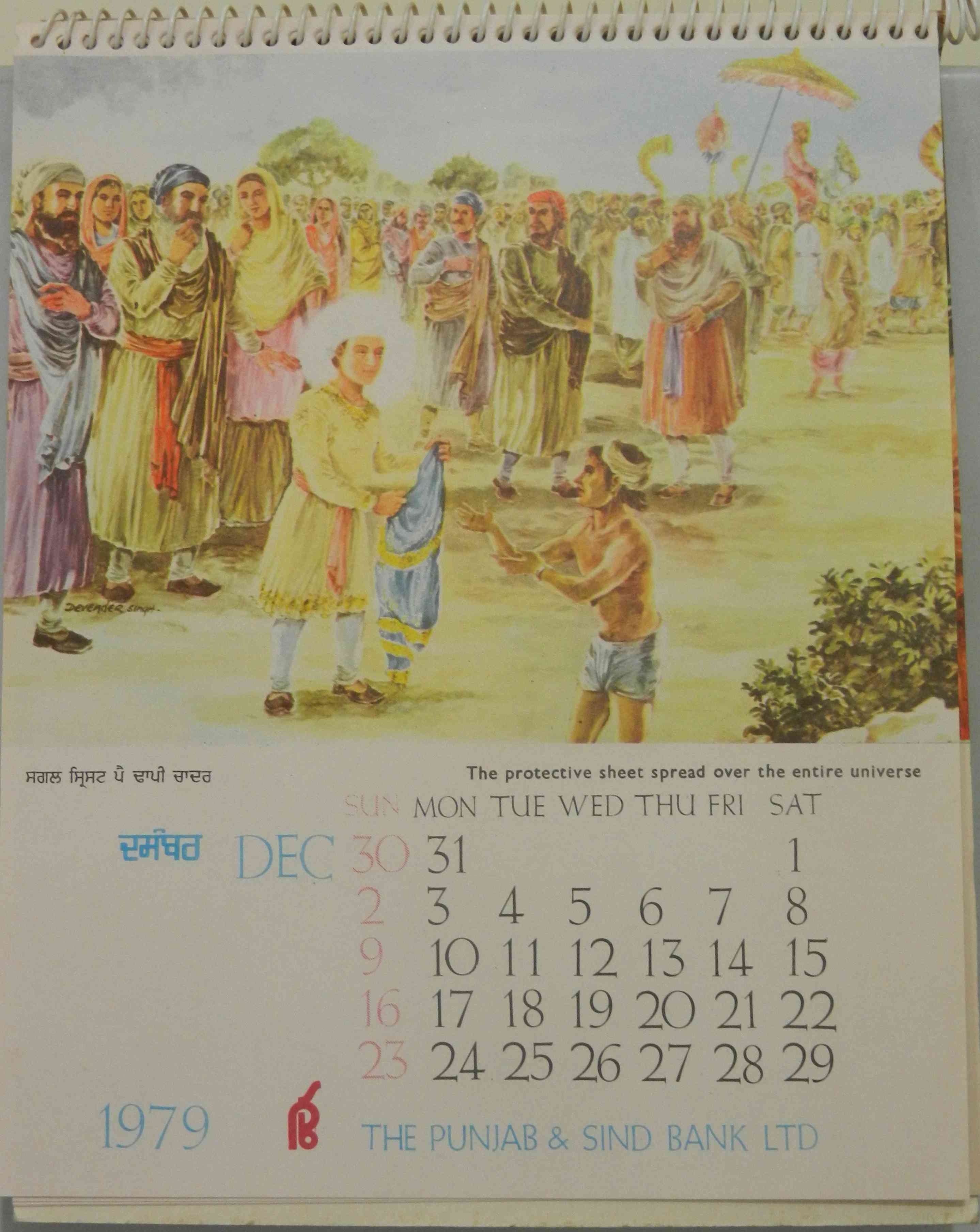
For 1979, the PSB issued a calendar titled “Guru as Child”. The choice of theme was meant to coincide with the United Nations’ declaration of the International Year of the Child. As Inderjit Singh’s introductory note in the calendar explained:
We ask for everything from the Lord like a child. The year 1979 is being celebrated as the International Year of the Child. Efforts are being made to impress upon us our duty towards children. But what is the source of inspiration for children? Who guides and shapes their lives? We seldom consider this aspect.
This table calendar is an effort to highlight this important perspective. Various episodes and anecdotes from the lives of the revered Gurus during their childhood, including their playful activities, miraculous and divine actions, acts of bravery and firm determination, spirit of humility and dedicated service, have been portrayed. This spiritual heritage should act as a guiding star for present-day children.
In addition to publishing the yearly illustrated calendar, the PSB was actively involved in large-scale public programmes such as the 500th birth anniversary celebrations of the third Sikh Guru, Amar Das (1479–1574), in the year 1979. This was an important event which involved the Government of India releasing a first-day cover (using a history painting by Devender Singh) and a stamp commemorating Guru Amar Das. The PSB released a calendar, published books, organised exhibitions on Sikh history and also opened its 500th branch in the city of Goindwal as part of the celebrations. Even today, the PSB retains a small collection of paintings and displays them in an exhibition every year on Guru Nanak’s birth anniversary at Gurdwara Rakabganj, Delhi.
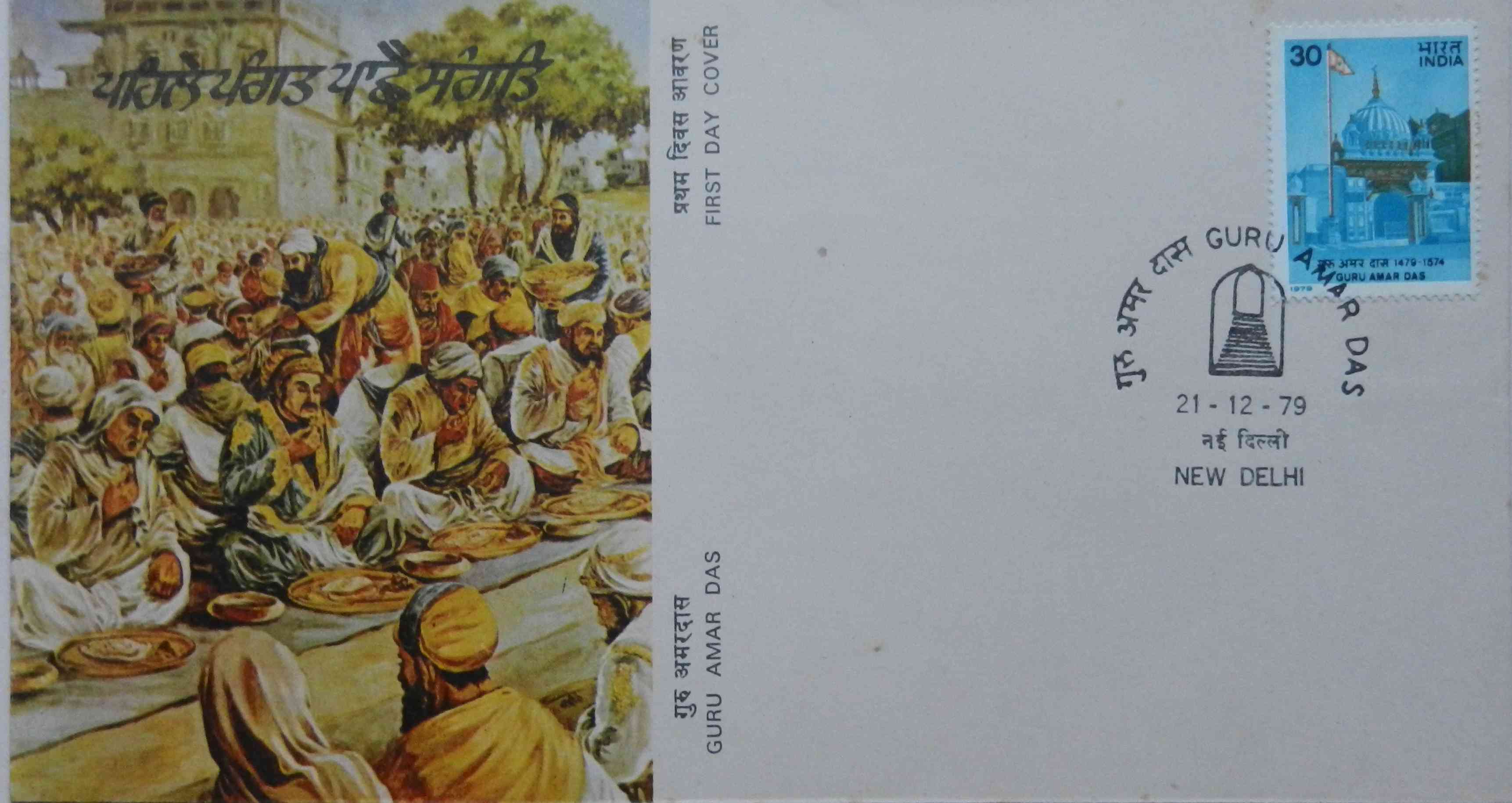
For the PSB, commissioning the paintings and the production of illustrated calendars and books was a valuable exercise. The bank saw its work as a seva to the community – of promoting Sikh history and through it instilling a sense of pride in the younger generation, inspiring them to emulate their historical heroes. For this work, it was not adequate to simply print pamphlets or popular tracts. As Kulmohan Singh of the PSB put it, “canvas is an extremely important medium to depict history from generation to generation. History needs evidence, it cannot be vague. And canvas is a very good document for coming generations.” This remark is telling: the narration of history, when supported by realistic visuals, provides a vivid and believable account of history.
The illustrated calendar and the modern history paintings have come to be a ‘document’ and ‘evidence’ of history. And this history is kept alive by creating and recreating the paintings: ‘paintings to history hai … Sikh kaum agar zinda hai to is karke kyunki hum history ko dohrate hain, use yaad karte hain’ (Paintings are the history … if the Sikh community lives, it is because we recreate our history, remember it). And with the easy reproducibility in popular culture, its reach and influence increase manifold. By all accounts, the PSB’s illustrated calendars and books proved to be tremendously popular. It became so successful ‘kyunki usmein history hoti thi, story hoti thi, knowledge hota hai, heritage hota tha, art hota tha’ (because [the calendar] had history, story, knowledge, heritage and art in it).
The PSB’s publication of illustrated calendars and books on Sikh history is significant for several reasons. The bank produced illustrated calendars on Sikh history continuously since the 1970s. This is not a standalone event, but a consistent effort by the institution and part of its self-identity as a “Sikh bank”. Even after nationalisation in 1980, the yearly calendar continues to be part of Sikh history, and today this activity is considered part of the bank’s heritage. The calendars (especially the ones published in the first three decades) proved to be highly popular. The format of illustrated panels with accompanying text explaining the scene created an attractive, informative and accessible calendar. The annual calendars became a source of information on Sikh history and art for many, and indeed they were promoted as such. It was quite common for people to cut out the history paintings of an old calendar and frame them as pictures of the Gurus and other revered personalities of the Sikh tradition, displaying them in their homes and offices. The PSB’s initiative was thus a highly influential pedagogical exercise. The history paintings commissioned for the calendar set a visual and narrative template which continues to be used and reused even today. Because of its emphasis on illustrating unique episodes from the Sikh past, a number of scenes came to be visually presented popularly for the first time.
Many themes and compositions first published by the PSB became so popular that they established a template to be followed by other artists for decades to come. Further, working with the PSB gave increased visibility to the artists, bringing in more work for them, from other institutions as well as commissions from individuals. Finally, the institutional production of history paintings and calendars, especially when the institution became a public sector enterprise, combined with an emphasis on the “historical background” which was involved in its creation, gave this Sikh “heritage” an unmatched historical validity, acceptability and prestige.
Excerpted with permission from The Story of a Sikh Museum: Heritage, Politics, Popular Culture, Kanika Singh, Cambridge University Press.
